
This post contains affiliate links. I may earn a small commission if you buy through them.
No one hands you a manual when you fall in love. You figure out how to communicate, how to fight, how to make up, and how to keep choosing each other — mostly by trial and error. But there’s a shortcut: reading what the researchers, therapists, and relationship scientists have already figured out.
The right relationship book won’t fix a broken relationship overnight. But it can give you and your partner a shared language, a new framework, and the tools to actually use them. The best ones feel less like self-help and more like a wise friend who happens to have a PhD.
I’ve pulled together the 10 best relationship books for couples in 2026 — books that are research-backed, therapist-approved, and genuinely readable. Whether you’re in a strong relationship looking to go deeper, or working through a rough patch together, there’s something here for you.
Why Reading Together Strengthens Your Relationship
Relationships don’t fail because people stop loving each other. They fail because people stop understanding each other. Books give you both a common reference point — something to discuss, something to apply, and a reason to have conversations you wouldn’t otherwise have.
Reading the same book creates a shared experience. You’ll start noticing patterns in your relationship that you never had words for before. You’ll understand why your partner reacts the way they do in conflict. You’ll recognize your own attachment patterns. And you’ll have something to talk about on date night that goes a little deeper than ‘how was your day?’
The 10 Best Relationship Books for Couples in 2026
1. The 5 Love Languages by Gary Chapman
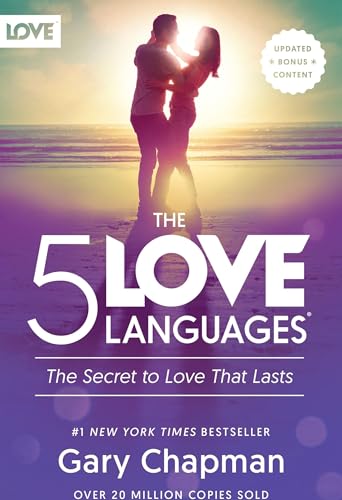
Best for: Couples who feel like they’re giving but not feeling received
If there’s one relationship book almost everyone has heard of, it’s this one — and for good reason. Gary Chapman’s core idea is simple: people express and receive love in five different ways — Words of Affirmation, Acts of Service, Receiving Gifts, Quality Time, and Physical Touch. If you and your partner have different primary love languages, you can both be trying hard and still feel unloved.
The 5 Love Languages has sold over 20 million copies because the concept is immediately recognizable. You’ll read it and think: ‘That’s exactly what’s been happening.’ It’s the on-ramp to every deeper relationship conversation that follows.
2. The Seven Principles for Making Marriage Work by John Gottman

Best for: Couples who want research-backed relationship tools
John Gottman spent decades running what became known as the ‘Love Lab’ — a research facility where he observed thousands of couples and identified with startling accuracy which ones would stay together and which wouldn’t. The Seven Principles is his distillation of that research into practical tools.
The principles cover everything from building friendship as a foundation to navigating conflict without contempt to creating shared meaning. It’s not light reading, but it’s one of the most substantive relationship books available. If you want to understand what actually makes relationships work at a structural level, start here.
3. Hold Me Tight by Dr. Sue Johnson

Best for: Couples who feel emotionally disconnected or stuck in cycles
Dr. Sue Johnson is the creator of Emotionally Focused Therapy (EFT), one of the most evidence-based approaches to couples work available. Hold Me Tight translates that therapy into seven healing conversations that couples can have on their own.
What makes this book different is its focus on attachment — the deep human need to feel safe, seen, and securely connected to your partner. If you and your partner keep having the same argument over and over, or if you feel like you’re drifting apart despite still loving each other, this book explains why — and what to do about it.
4. Attached by Amir Levine and Rachel Heller

Best for: Understanding why you react the way you do in relationships
Attachment theory — the science of how we bond with others — has transformed how therapists understand relationships. Attached brings that science to a general audience in a way that’s genuinely gripping. Levine and Heller explain the three main attachment styles (secure, anxious, and avoidant) and how they play out in romantic relationships.
Reading this book is often a revelation. You’ll recognize yourself and your partner on the page. You’ll understand why certain dynamics feel so hard to break — and what you can actually do about them. It’s especially useful if one partner tends to pull away while the other tends to pursue.
5. Mating in Captivity by Esther Perel
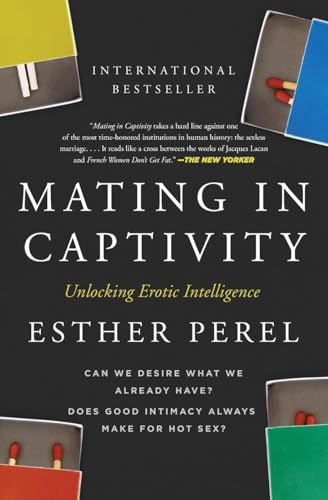
Best for: Long-term couples navigating desire and intimacy
Esther Perel is one of the most provocative and insightful voices in relationships today. Mating in Captivity tackles a paradox that most long-term couples eventually face: the very closeness and security we need in love can work against the desire and excitement we also crave.
Perel argues that maintaining a sense of mystery, individuality, and even psychological distance is essential for sustaining desire over time. This isn’t a book about quick fixes — it’s a deeper philosophical and practical exploration of how love and eroticism coexist (and sometimes don’t). It will change the way you think about intimacy.
6. Getting the Love You Want by Harville Hendrix

Best for: Couples who want to understand the root of their patterns
Harville Hendrix introduces the concept of Imago — the unconscious image of love we carry from childhood that shapes who we’re attracted to and how we behave in relationships. This book argues that we unconsciously choose partners who mirror our early caregivers, not to be hurt again, but to heal.
It’s a thought-provoking lens that explains a lot about recurring conflicts and the pull toward certain relationship dynamics. The book includes practical exercises — including structured dialogues — that therapists have used for decades. It’s not the lightest read, but the insights are deeply valuable.
7. Nonviolent Communication by Marshall Rosenberg
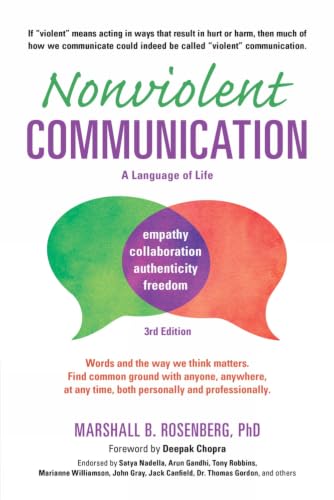
Best for: Couples who want to communicate without escalating
Marshall Rosenberg’s Nonviolent Communication (NVC) model is one of the most practically useful communication frameworks available, and it applies directly to relationships. The model — Observation, Feeling, Need, Request — teaches you to express yourself without blame or criticism, and to hear your partner without taking it personally.
It sounds simple, but most of us were never taught to communicate this way. Applying NVC consistently changes the texture of difficult conversations. Arguments that used to spiral into defensiveness and hurt start heading in a more productive direction. If you want one book that will immediately change how you talk to each other, this is it.
8. Fight Right by Julie and John Gottman
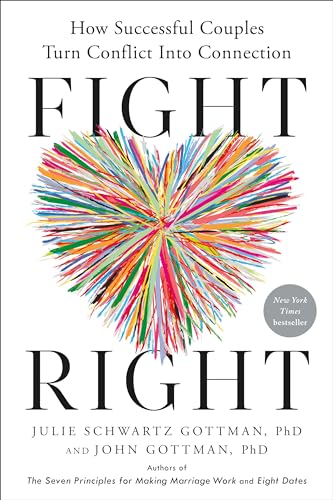
Best for: Couples who want to fight without doing damage
The Gottmans return with a more recent and focused book on conflict. Fight Right isn’t about avoiding arguments — it’s about having them in ways that bring you closer rather than further apart. The book identifies the specific patterns (contempt, criticism, defensiveness, stonewalling) that damage relationships over time, and gives you tools to interrupt them.
What makes this book stand out is its specificity. It’s not general advice — it’s practical techniques for real moments of conflict. If you’ve read The Seven Principles and want to go deeper on the conflict dimension specifically, this is the natural next step.
9. Us by Terrence Real
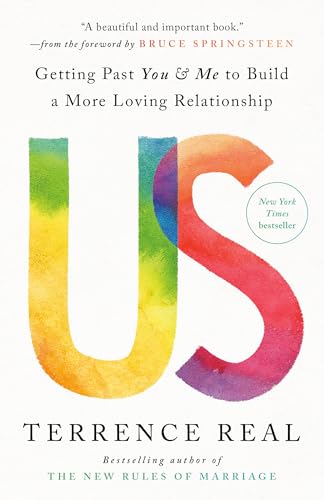
Best for: Couples willing to look honestly at their individual contributions
Terrence Real is a couples therapist whose work focuses on how our individual psychological patterns — particularly shame, ego, and defensive habits — damage our relationships. Us is about moving from an ‘I’ orientation to a ‘we’ orientation: learning to prioritize the relationship over being right.
It’s a challenging book because it asks each partner to honestly examine their own role in relationship problems rather than focusing on what the other person does wrong. But that challenge is exactly what makes it valuable. Real’s writing is direct, sometimes blunt, and consistently insightful.
10. Eight Dates by John and Julie Gottman

Best for: Couples who want structured conversations and quality time
Eight Dates is the most practical book on this list — and in some ways the most accessible. The Gottmans outline eight specific date night conversations covering the topics that matter most to long-term relationship health: trust, conflict, sex, money, family, adventure, growth, and dreams.
Each date comes with a prompt, a suggested setting, and research-backed context about why the conversation matters. It’s an ideal complement to journaling tools like the Closer journal — extending your regular check-ins into deeper, themed conversations once a month or so.
How to Actually Read These Books Together
Buying a relationship book is easy. Reading it together and applying it is where most couples stop. A few things that help:
- Read separately, discuss together. You don’t have to read at the same pace. Read a chapter, then share one thing that resonated.
- Don’t use the book as a weapon. ‘You should read this chapter’ is not a great way to start a conversation.
- Pick one concept at a time. Trying to apply everything at once is overwhelming. Choose one idea and practice it for two weeks.
- Pair it with a structured check-in. Books give you the framework — regular check-ins help you apply it. Our free Couples Check-In Kit is a good starting point.
Frequently Asked Questions
What is the best relationship book for couples who are struggling?
Hold Me Tight by Dr. Sue Johnson is the most therapy-aligned option for couples in genuine difficulty. It’s based on Emotionally Focused Therapy and is specifically designed to help couples who feel stuck, distant, or trapped in negative cycles.
What is the best first relationship book to read together?
The 5 Love Languages is the most accessible entry point — it’s short, practical, and immediately applicable. Most couples find that it opens up conversations they’ve never had before.
Are relationship books actually helpful?
Research suggests that reading about relationship dynamics and applying the concepts does help, particularly books based on established therapeutic approaches like Gottman’s research or Sue Johnson’s EFT. The key is applying the ideas, not just reading them.
Do both partners need to read the book?
It helps, but it’s not always necessary. Reading the same book creates a shared vocabulary. But even if only one partner reads it and shares the key insights, many of the concepts can still be applied in how you approach conversations and conflict.
Final Thoughts
The best relationship isn’t the one that never struggles — it’s the one where both people keep choosing to understand each other better. These books are tools for that. They won’t do the work for you, but they’ll give you a much clearer map.
If you’re not sure where to start, pick The 5 Love Languages for accessibility, The Seven Principles for depth, or Hold Me Tight if you’re going through something hard. And if you want a more structured way to apply what you’re learning — week by week, conversation by conversation — the Closer journal pairs well with any of these.
Want a guided way to put these ideas into practice?
The free Couples Check-In Kit gives you 10 conversation starter questions to use with your partner tonight. No prep needed — just download and talk.

Sophie Bennett is a relationship writer passionate about helping couples grow closer, communicate better, and build love that lasts. She covers everything from long distance relationships to healing after heartbreak — with warmth, and no toxic positivity.