This post contains affiliate links. If you buy through them, I may earn a small commission at no extra cost to you.
Some nights call for a full plan — a reservation, an outfit, an occasion. But most nights just need something to do that isn’t another scroll through the same streaming service.
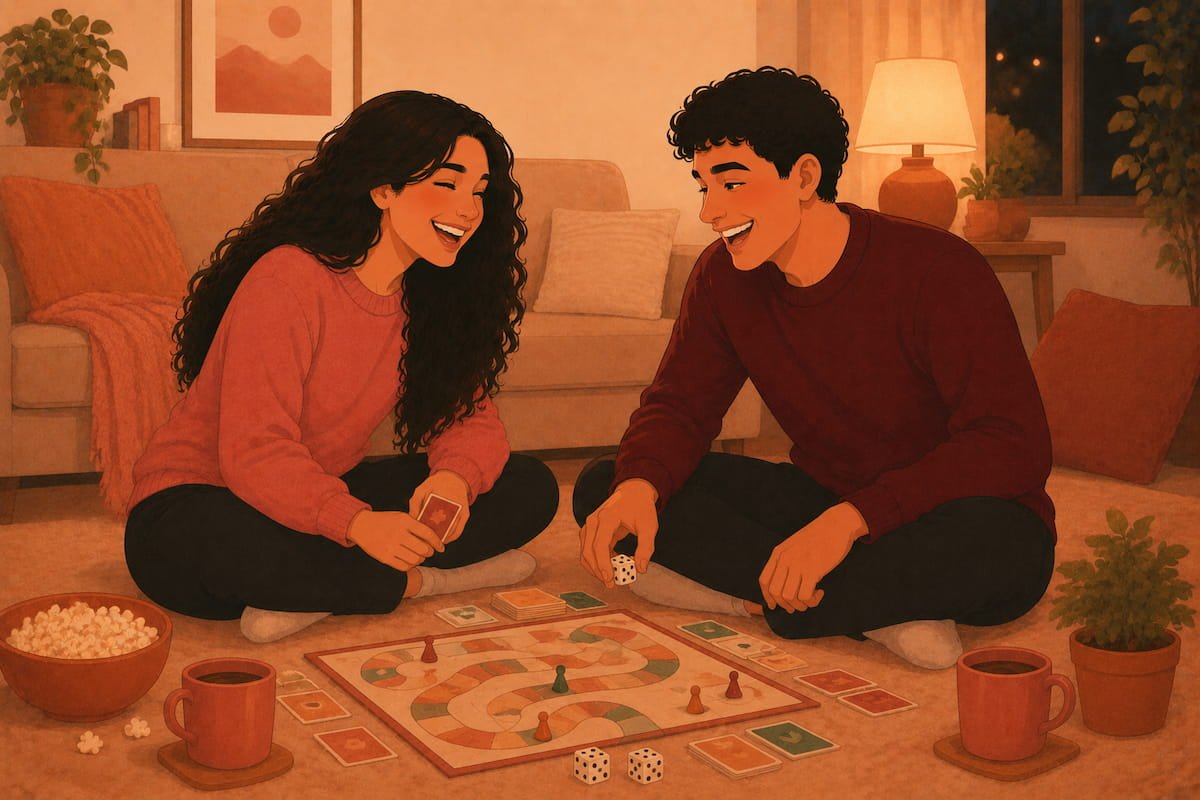
Games are the answer more often than people give them credit for. They create a shared focus, a reason to laugh, and the kind of low-pressure interaction that often turns into the best conversations. The right game for the right mood can make a Tuesday feel like an actual event.
This list covers 25 fun games for couples at home — organized by category so you can find what fits the evening. Each one comes with how to play and why it works specifically for two people. If you’re looking for even more ways to spend time together, the full list of 35 fun couple activities at home has plenty beyond games.
Why Games Work So Well for Couples
There’s a reason game nights feel different from a regular evening in. When you’re playing something together, you’re both fully present in a way that’s hard to manufacture otherwise. Phones go down. The evening has a shape.
Research on couple bonding consistently points to shared laughter and novel experiences as two of the strongest predictors of relationship satisfaction. A good game delivers both. You’re doing something new together, and if it’s the right game, you’re going to laugh.
The other thing games do well is reveal. How someone handles losing, how they think under pressure, how creative they get when they’re stuck — all of that comes out in ways a regular conversation wouldn’t. It’s one of the reasons games are especially good early in a relationship. If you’re in those early months, the first 90 days of a relationship is a good read alongside a games list like this one.
Board Games for Two
The two-player board game category has genuinely excellent options now. These aren’t watered-down versions of group games — they’re built for two and play better for it.
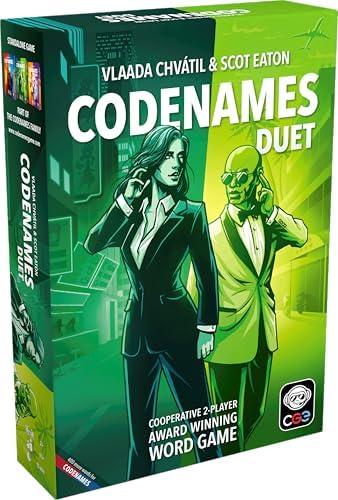
1. Codenames Duet
What it is: The cooperative two-player version of the hugely popular word-association game Codenames.
How to play: A grid of 25 words sits between you. Each of you has a map showing which words are “agents” your partner needs to find. You take turns giving one-word clues that point to multiple agents on the grid, while avoiding the assassin cards that end the game instantly. You win or lose together.
Why couples love it: Because you’re working with your partner’s mind, not against it. Figuring out how they think — and watching them figure out how you think — is genuinely fascinating. Most couples end up arguing about clues in the best possible way.
It’s one of the best two-player games made — here’s where to find it:
2. Patchwork
What it is: A two-player strategy game about building a quilt from oddly shaped fabric pieces on a personal board.
How to play: Players take turns buying and placing Tetris-like patches on their 9×9 board, spending buttons (the currency) and time. The goal is to fill your board as completely as possible before the game ends. Empty spaces cost you points at the end.
Why couples love it: It’s calm enough for a relaxed evening but strategic enough to keep both of you genuinely thinking. There’s no confrontation or conflict — just two people quietly trying to build something beautiful, which turns out to be a surprisingly pleasant way to compete.
Patchwork is a perfect pick for a low-key but engaging evening:

3. Jaipur
What it is: A fast-paced two-player card game set in an Indian marketplace where both players compete as merchants vying for the Maharaja’s seal of approval.
How to play: On your turn, you either take cards from the market or sell sets of goods for tokens. Camels are used to take multiple cards at once. The player who wins two of three rounds wins the game. A full match plays in about 30–45 minutes.
Why couples love it: It’s easy to learn and hard to master. The tension builds naturally toward the end of each round as both players try to time their sales for maximum points. Expect to play best-of-three without meaning to.
Jaipur is a staple two-player game worth adding to your collection:

4. Ticket to Ride: Europe
What it is: A classic strategy board game where players collect colored train cards to claim railway routes across a map of Europe.
How to play: On each turn, you either draw train cards, claim a route by playing matching cards, or draw destination tickets that give you bonus points for connecting specific cities. The player who builds the longest continuous route gets a bonus. Points are tallied at the end and incomplete routes lose you points.
Why couples love it: It’s approachable enough for non-gamers but has enough strategy to stay interesting over many plays. The Europe map adds tunnels and ferries that make it slightly more varied than the original. Blocking each other’s routes is technically optional, but rarely stays that way.
Ticket to Ride: Europe is a reliable favorite for couples who enjoy strategy:

5. 7 Wonders Duel
What it is: A condensed two-player version of the award-winning civilization-building card game 7 Wonders.
How to play: Over three ages, players draft cards from a shared tableau to build their civilization — developing science, military, commerce, and culture. There are three ways to win: military dominance, scientific supremacy, or the most points at the end. Each age reveals more cards as others are taken.
Why couples love it: It plays in about 30 minutes but feels genuinely epic. The multiple win conditions mean the game can shift dramatically right up to the end. It rewards strategic thinking and benefits from multiple plays as you both learn each other’s patterns.
7 Wonders Duel is one of the most acclaimed two-player games available:

Card Games for Couples
Card games are the most flexible category on this list. Low setup, easy to pause, and the best ones scale well, whether you want something silly or something that goes a little deeper.
6. We’re Not Really Strangers
What it is: A card game built around meaningful questions and honest conversation, designed to deepen the connection between two people.
How to play: The deck is divided into three levels — Perception, Connection, and Reflection — each progressively more personal. Players take turns drawing cards and answering the prompts. Some cards include wildcards that shift the dynamic unexpectedly. There’s no scoring; the point is the conversation.
Why couples love it: Even couples who have been together for years find questions in this deck they’ve never thought to ask. It’s not a party game or a silly one — it’s genuinely designed to produce connection. Pairs well with wine and a quiet evening. It also pairs naturally with the deep questions to ask your partner for an extended conversation night.
We’re Not Really Strangers is worth having for nights when you want to go deeper:

7. Exploding Kittens
What it is: A fast, chaotic card game of strategic luck where the goal is to avoid drawing an Exploding Kitten card.
How to play: Players take turns drawing cards from a shuffled deck. Most cards let you skip draws, peek at the deck, attack your opponent, or defuse an Exploding Kitten if you draw one. Run out of defuse cards and draw an Exploding Kitten — you lose. Games typically last 10–15 minutes.
Why couples love it: It’s absurd, fast, and produces immediate laughter. The illustrations are ridiculous by design and the gameplay is simple enough that you can play multiple rounds without thinking too hard. Perfect for when you want something energetic without much setup.
Exploding Kittens is a guaranteed good time for two:

8. Taco Cat Goat Cheese Pizza
What it is: A quick reflex card game that’s much more chaotic than it sounds.
How to play: Players take turns flipping cards while saying the words “taco, cat, goat, cheese, pizza” in sequence. When a spoken word matches the flipped card, everyone slaps the pile — the last person to slap takes the pile. Special cards trigger unique actions. The goal is to get rid of all your cards.
Why couples love it: It’s fast, physical, and produces the kind of loud laughter that’s hard to manufacture. Takes about 10 minutes and is almost impossible not to replay. Good for when you want something that requires zero brain power and maximum energy.
Taco Cat Goat Cheese Pizza is the right call for a high-energy evening:

9. Love Letter
What it is: A compact deduction card game with a romantic theme, played entirely with a 20-card deck.
How to play: Each player holds one card at a time. On your turn, you draw a card and play one, using its effect to eliminate your opponent or protect yourself. The goal is to be holding the highest-value card when the round ends, or to be the last player standing. Rounds take about five minutes.
Why couples love it: It’s elegant, portable, and rewards reading your opponent. The theme fits naturally for a couple’s game night, the rules take two minutes to explain, and the depth-to-size ratio is remarkable. Take it on trips — it fits in a coat pocket.
Love Letter is a perfect compact game to always have on hand:

10. Uno
What it is: The classic color-and-number matching card game that needs no introduction.
How to play: Match the color or number of the top card on the discard pile, or play a special action card. Draw Two, Skip, Reverse, and Wild cards disrupt the flow and shift the momentum. Yell “Uno” when you have one card left. The first player to empty their hand wins the round.
Why couples love it: Two-player Uno is faster and more strategic than the group version — every Draw Two or Skip hits directly. The game is familiar enough to play without thinking but competitive enough to produce genuine tension. Add a house rule that the loser does the dishes and suddenly every game matters.
Uno is always worth having — here’s the classic version:

Trivia & Word Games
Good for couples who are competitive in the friendly-argument way. These tend to reveal unexpected things about how each of you thinks — and how much you actually know about each other’s areas of expertise.
11. Bananagrams
What it is: A fast-paced word tile game where each player races to build their own crossword grid using all their letters.
How to play: Each player starts with a set of letter tiles and races to arrange them into a valid crossword grid. When someone uses all their tiles, they call “Peel” and everyone draws another tile. Rearranging your grid is allowed and often necessary. First to use all tiles when the pile is empty wins.
Why couples love it: It’s chaotic, fast, and surprisingly tense. Two-player Bananagrams moves quickly and the lack of turns means you’re both working simultaneously. It will absolutely expose any unspoken opinions about spelling.
Bananagrams is compact, fast, and always worth having:

12. Trivial Pursuit: Master Edition
What it is: The classic trivia game redesigned with updated questions across six categories — geography, entertainment, history, art and literature, science and nature, and sports and leisure.
How to play: Players move around the board answering trivia questions to collect pie pieces from each category. The first player to fill their pie and answer a final question at the center wins. The two-player version moves faster since you’re not waiting on a group.
Why couples love it: Most couples have dramatically different areas of knowledge, which makes Trivial Pursuit naturally balanced and surprisingly revealing. You’ll learn things about your partner’s brain you didn’t know. The trash talk tends to improve with each category wedge.
Trivial Pursuit holds up — here’s the Master Edition:

13. Taboo
What it is: A word-guessing game where you describe a word to your partner without using the most obvious clue words.
How to play: One player draws a card with a target word and a list of forbidden words. They must get their partner to say the target word without using any of the forbidden ones — under a timer. The more cards you get through in a round, the more points you score.
Why couples love it: It forces creative thinking and produces some of the best moments when the clue-giver clearly knows exactly what they mean but can’t find a way to say it. Playing with a partner who knows you well adds a layer — inside references and shared context become a legitimate strategy.
Taboo is a classic that works just as well for two:

14. Scattergories
What it is: A categories-based word game where you have to come up with unique answers that start with a specific letter.
How to play: Roll the letter die to get your letter for the round. A list of 12 categories is revealed and a timer starts. Each player writes answers for every category that begin with the chosen letter. Answers that match your partner’s don’t score — only unique answers count.
Why couples love it: The scoring mechanic rewards creative thinking over obvious answers. The arguments about whether an answer counts are half the fun. Two-player Scattergories is fast, funny, and one of the better word games for couples who enjoy a light debate.
Scattergories is a consistently fun pick for word game nights:

Creative & Active Games
These are for when you want to get out of your heads and into something more physical or imaginative. Lower stakes, higher energy, and reliable for producing laughter.
15. Pictionary
What it is: The classic drawing-and-guessing game where one player draws a word or phrase and their partner tries to guess it within a time limit.
How to play: Draw a card to get your word, then draw it — no letters, no numbers, no verbal clues. Your partner guesses while the timer runs. Two-player Pictionary works as a cooperative challenge (can you get through X cards in one session?) or a competitive challenge with a points tally.
Why couples love it: Artistic ability is irrelevant — often inversely correlated with how funny it is. The gap between what the drawer thinks they’re drawing and what the guesser sees is a reliable source of genuine laughter. It’s also endlessly replayable because the words change every game.
Pictionary is a guaranteed laugh — here’s where to find it:

16. Jenga
What it is: A physical balance game where players take turns removing wooden blocks from a tower and placing them on top without toppling it.
How to play: On your turn, use one hand to remove any block from below the top three rows and place it on top. The tower gets progressively more unstable. The player who causes the tower to fall loses. With a blank Jenga set, you can write custom prompts on each block — dares, questions, or challenges that trigger when you pull that block.
Why couples love it: Two-player Jenga is quieter and more focused than the group version — the tension builds slowly and the collapse is always dramatic. The custom prompt variation turns it into a completely different game, essentially a physical conversation starter.
Classic Jenga is worth having — or pick up a blank set for custom prompts:

17. Charades
What it is: The original acting-and-guessing game — one player acts out a word or phrase silently while their partner tries to guess it.
How to play: Use standard charade signals — tap fingers on arm for number of words, pull ear for “sounds like,” mime movie/book/song categories. Set a timer and see how many you can get through. You can use a charades app to generate prompts or write your own on slips of paper.
Why couples love it: No equipment needed and the game is as good as the prompts you use. Customizing the prompts to your relationship — inside jokes, shared memories, things only you two would know — makes it genuinely unique every time.
18. Sketchbook Drawing Challenge
What it is: A free-form drawing game you create yourselves using a sketchbook and a list of prompts.
How to play: Take turns calling out a subject — an emotion, a memory, an animal doing something specific — and both of you draw it simultaneously. Compare results after a set time. You can score it, laugh at it, or just keep the sketchbook as a record of the evening.
Why couples love it: It requires nothing but paper and something to draw with, and it scales to any level of artistic ability. The versions where you draw memories from your relationship end up being genuinely meaningful. It’s also one of the better activities for couples who want something creative rather than competitive.
Classic Games with a Couples Twist
These games have been around long enough that you probably already know the rules. Playing them as a couple adds a different dynamic — the stakes feel more personal when it’s just the two of you.
19. Chess
What it is: The two-player strategy game played on an 8×8 board where the goal is to checkmate your opponent’s king.
How to play: Each of the six piece types moves differently. The game rewards long-term planning, pattern recognition, and reading your opponent’s intentions. If one player is significantly more experienced, a handicap (removing a queen or rooks) levels the playing field quickly.
Why couples love it: Chess is a direct window into how your partner thinks under pressure. Learning to play together — or teaching a partner who doesn’t know the game yet — is its own kind of bonding. A beautiful wooden or weighted chess set also makes the game feel like an occasion rather than just an activity.
A quality chess set makes the game feel worth sitting down to:

20. Connect Four
What it is: A vertical grid game where players take turns dropping colored discs, trying to be the first to get four in a row — horizontally, vertically, or diagonally.
How to play: Players alternate dropping discs into any of the seven columns. Discs fall to the lowest available space. The first to connect four discs in any direction wins. Games typically take 5–10 minutes, which means you’ll play multiple rounds.
Why couples love it: It’s fast, strategic in a satisfying way, and produces genuine competitive tension without being complicated. The quick game length makes it perfect for a “best of five” session, and the stakes escalate naturally the longer the series goes.
Connect Four is a compact classic worth having:

No-Equipment Games for Couples
Nothing to buy, nothing to set up. These work anywhere — on a couch, at a kitchen table, on a long drive. The best ones are the ones you customize to your relationship.
21. 20 Questions
What it is: A classic guessing game where one player thinks of a person, place, or object and the other asks up to 20 yes-or-no questions to identify it.
How to play: The thinking player keeps a mental note of the answer. The guessing player asks yes-or-no questions to narrow it down — starting broad (“Is it alive?”) and getting more specific. Guess correctly within 20 questions to win.
Why couples love it: Restricting the category to things from your relationship — places you’ve been together, moments you’ve shared, people you both know — turns it into a walk through your shared history. Simple, portable, and endlessly replayable.
22. Two Truths and a Lie
What it is: A revealing game where each player shares two true statements and one lie, and the other has to guess which is the lie.
How to play: Each player prepares three statements about themselves — two true, one false — and presents them in any order. The other player asks follow-up questions before guessing which one is the lie. Swap after each round.
Why couples love it: Even long-term couples are surprised by what they don’t know about each other. The game rewards both honesty and creative deception, and the follow-up questions often lead to genuinely interesting conversations. Pairs naturally with a deeper conversation at night, using the deep questions to ask your partner.
23. The Newlywed Game
What it is: A question-and-answer game based on the classic TV show, testing how well you know each other.
How to play: One player writes down their answers to a set of questions about the other player. The other player then answers the same questions out loud. Points go to matches. Swap roles for the next round. Use a list of questions you write yourselves or find a prompt list online.
Why couples love it: The gaps between what you thought your partner would say and what they actually say are always revealing — and usually funny. It’s a genuinely good way to check in on how well you’re paying attention to each other.
24. Would You Rather
What it is: A conversation game built around choosing between two equally difficult, absurd, or revealing options.
How to play: One player poses a “would you rather” scenario with two options. The other answers and explains why. Then swap. There are no wrong answers — the point is the reasoning, not the choice itself.
Why couples love it: The questions can range from completely silly (“Would you rather only be able to whisper or only be able to shout?”) to surprisingly revealing (“Would you rather know when you’re going to die or how?”). The combination of both in one session tends to produce memorable evenings.
25. Never Have I Ever
What it is: A disclosure game where players make statements beginning with “Never have I ever…” and the other player responds based on their own experience.
How to play: Players take turns making “Never have I ever” statements. The other player drinks (or takes a point, or does a forfeit) if they have done the thing. The game works best when players are genuinely honest, and the statements get progressively more interesting.
Why couples love it: It’s one of the best ways to learn unexpected things about someone you think you already know well. Tailoring the statements to things you genuinely wonder about your partner — rather than generic party game prompts — makes it a different game entirely.
Frequently Asked Questions
What are the best two-player board games for couples?
Codenames Duet, Jaipur, and 7 Wonders Duel are consistently the highest-rated two-player board games. Patchwork and Ticket to Ride: Europe are excellent if you prefer something more relaxed and strategic. All five are built specifically for two players rather than adapted from group games.
What games can couples play at home without buying anything?
20 Questions, Two Truths and a Lie, The Newlywed Game, Would You Rather, and Never Have I Ever all need nothing but yourselves. Charades needs nothing if you write your own prompts. A regular deck of playing cards also opens up dozens of options not covered here.
How do you make game night more fun as a couple?
Pick something neither of you has played before — novelty helps. Add snacks and drinks, set aside the phones, and agree that finishing the game is optional. The best game nights are the ones where you end up talking more than playing. If a game isn’t working, abandon it without guilt.
Are there games that help couples connect emotionally?
We’re Not Really Strangers is specifically designed for connection — it moves through levels of increasingly personal prompts and reliably produces conversations couples weren’t expecting to have. The Newlywed Game and Two Truths and a Lie also work well for this. For a non-game version of the same idea, the deep questions to ask your partner are worth bookmarking alongside this list.
The Bottom Line
The best game night isn’t about the game. It’s about showing up and doing something together that isn’t just existing in the same room.
Pick one from the list above, clear the coffee table, and see what the evening turns into. The right game for the right mood can make any night feel like something worth remembering.
Ready to go deeper with your partner today? Download our free Couples Check-In Kit — 10 questions to bring you closer this week.

Sophie Bennett is a relationship writer passionate about helping couples grow closer, communicate better, and build love that lasts. She covers everything from long distance relationships to healing after heartbreak — with warmth, and no toxic positivity.